A garage door in Franklin usually gives no warning before a torsion spring fails. One second it lifts fine, the next there's a sharp crack from above the door and it won't budge. Homeowners in Cool Springs and Westhaven call asking what went wrong before they ask what it costs. Both questions matter, but cost is what actually decides whether this gets fixed today.
Torsion Versus Extension Springs
Franklin garage doors typically use one of two spring types. Torsion springs wind tightly along a metal bar mounted just inside the header, twisting to store the force that lifts the door. Extension springs stretch instead, running along the horizontal tracks on either side and pulling as the door closes. Most homes in newer Franklin subdivisions carry torsion setups, while some older Downtown Franklin garages still run extension pairs. Torsion springs handle heavier doors with less strain and fewer safety concerns, which is part of why replacement quotes vary depending on which type sits in your garage.
Why Springs Are Sold In Pairs
Most garage doors run on two torsion springs, wound to opposite sides of a center shaft above the door. They're sized as a matched set from day one. When one breaks, the other has carried the identical workload since installation and is sitting near the same point of fatigue, even though it hasn't failed yet.
What Cycle Rating Changes
Every torsion spring carries a cycle rating, one open and one close counted as a single cycle, and that number drives the price difference between spring grades. A lower-rated spring costs less to buy but reaches the end of its life sooner. Homes in Berry Farms or Fieldstone Farms with a door running several times a day wear through a cheaper spring faster than one used occasionally.
Door Weight Sets The Wire Size
A heavier insulated door built for a Westhaven or Fieldstone Farms two-car garage needs a stiffer spring than a lighter single door downtown near Main Street. Get the strength wrong and the door either slams down too fast or refuses to stay put halfway up. This is where guessing goes wrong fast, since two springs that look nearly identical can carry very different loads depending on coil thickness and how tightly it winds.
High-Lift And Vaulted Garages
Homes with vaulted garage ceilings, more common in newer builds around Ladd Park and Founders Pointe, sometimes need a longer torsion shaft or an extra spring to handle the added track length. A heavier insulated door on a high-lift setup asks more of the spring pair than a standard two-car garage does, and that extra hardware shows up as a higher price on the estimate.
When Cables And Drums Are Involved
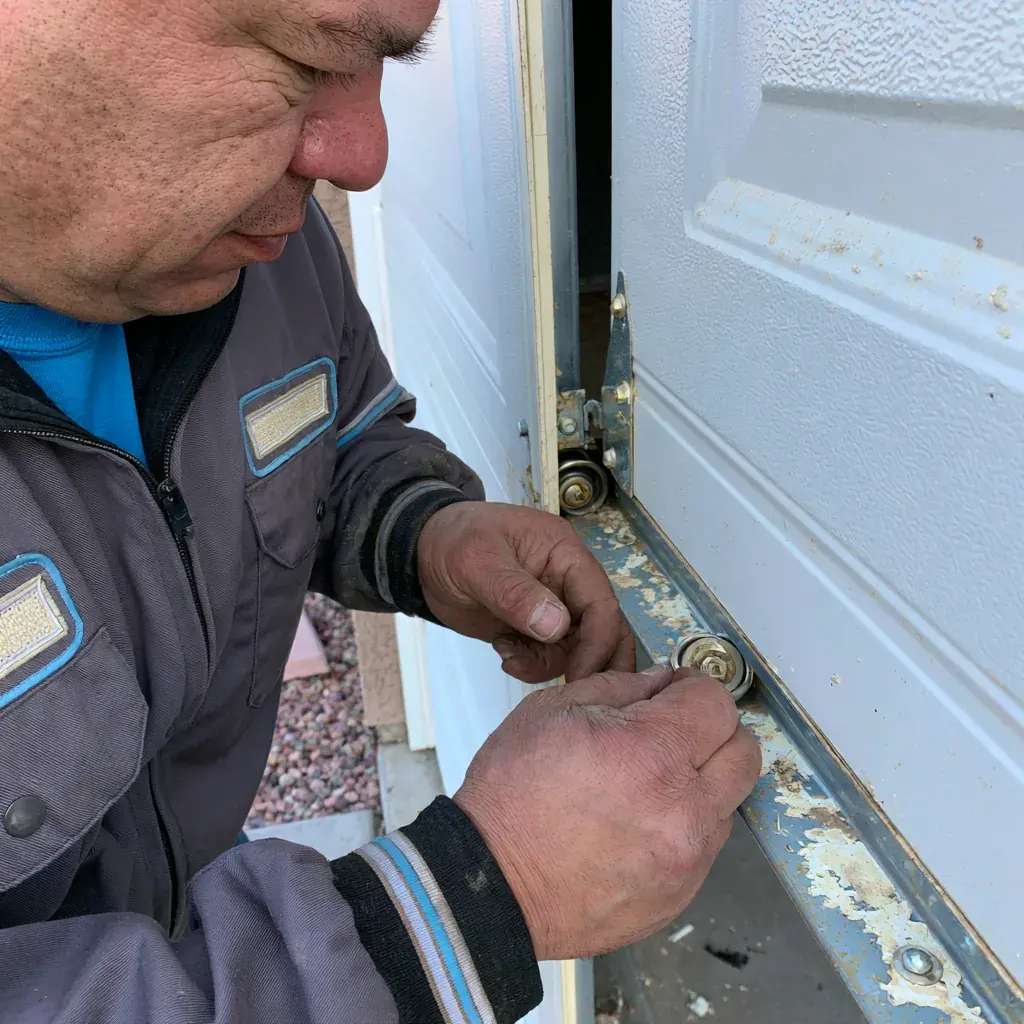
A broken spring rarely stays contained to itself. Once tension releases suddenly, the lift cable can jump its drum or the drum itself can bend, especially on a door that was partway up when the spring gave out. A technician checking a spring failure in a Westhaven or Fieldstone Farms garage will look at both drums and cables before quoting the job, because a cable replaced alongside the spring costs far less than a second visit once a frayed cable snaps on its own.
What Labor Actually Covers
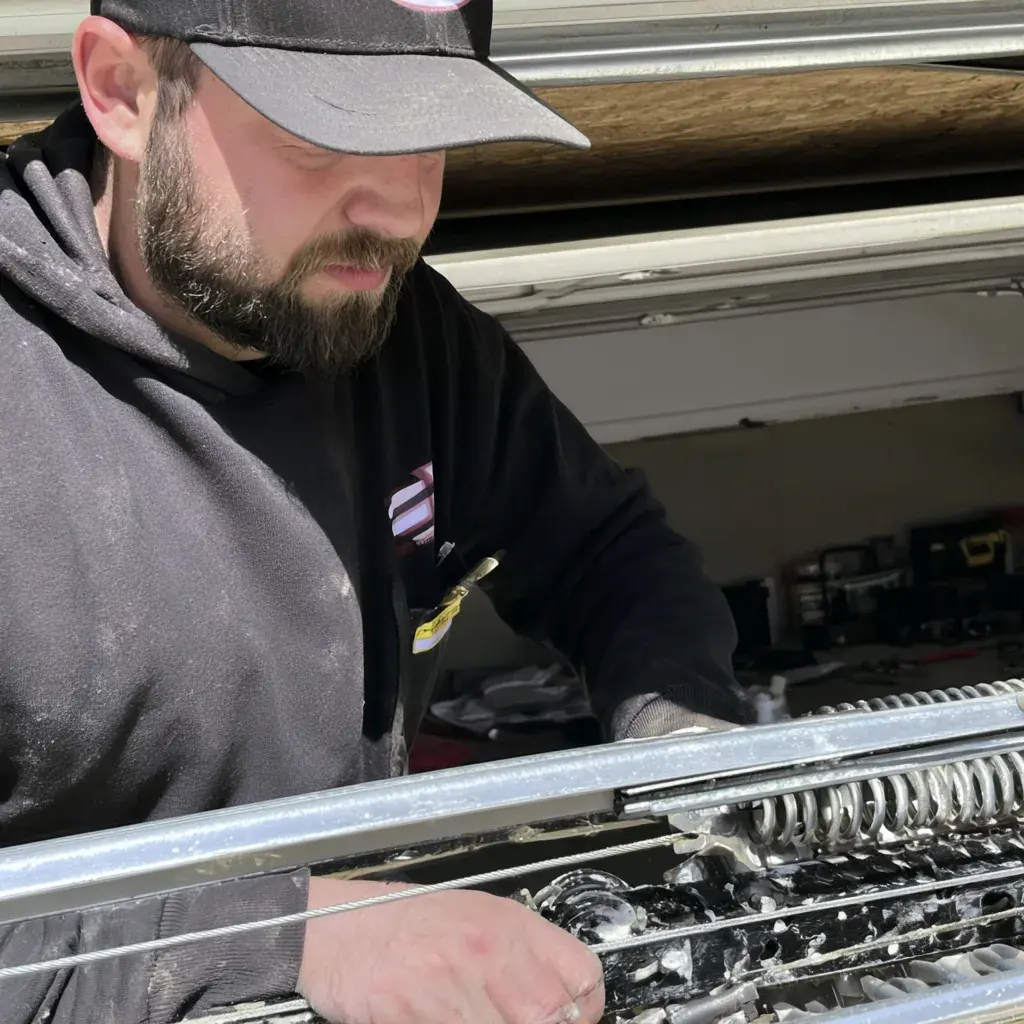
Labor on this job covers more than turning a wrench. The technician measures the door and shaft, sets the correct spring size from the cost table, then winds the coil to the exact number of turns the door needs to balance. That winding step is where real risk lives, since a spring under full tension can whip loose with enough force to break bones if the winding bars slip. It's also why homeowners from Downtown Franklin to Grassland are better off leaving this one to someone trained for it.
Grit And Grime Add Up Too
Pollen, mower dust and general yard grit tracked into a Franklin garage over a humid summer settle on the springs and bottom bracket over time, adding friction that makes an aging spring work harder than it should. A door that has been dragging or squeaking for months is often closer to failing than a homeowner realizes, and that slow wear rarely shows up until the moment the spring actually lets go.
The Occasional Hard Freeze
Franklin winters don't run brutally cold most years, with normal January lows near 30 degrees Fahrenheit, but a hard cold snap still finds every spring already worn thin. Steel loses some give as the temperature drops, and a spring that had another season left in warmer weather can pick a 20-degree morning in Stream Valley or Legends Ridge to finally let go.
What's Worth Checking Before Hiring
Franklin doesn't require a state contractor license for jobs under $25,000, and Williamson County hasn't adopted the home-improvement registration some Tennessee counties use, so there's no credential to look up before hiring. What actually matters: ask for proof of general liability insurance, a written price before the spring goes in, and the cycle rating of the part they're installing. A tech who answers those three questions without hesitation has done this work before, in Franklin and Cool Springs driveways alike.
What To Ask Before Booking
A price range only goes so far, because two garage doors that look identical can carry very different springs underneath. Wire gauge, coil size, door weight and whatever the opener is doing to the balance all factor in. An accurate number comes from someone actually looking at the springs, cables, drums and opener together, which is the point where a homeowner in Franklin is better off calling than guessing.
Dealing with this in your home?
Franklin's clay soil swells after storms rolling through Cool Springs and settles again once things dry out near the Harpeth River, and a garage door track anchored to a slab or crawl space foundation shifts right along with it. Homeowners near McKay's Mill or off Del Rio Pike often notice the door binding on one side first, right when the ground moves.