Annual Garage Door Tune-Up Plan for Franklin, TN
The full checklist, why Franklin's seasonal swings matter, and why nothing renews on its own.
An Annual Tune-Up Plan checks a Franklin garage door's springs, cables, rollers, tracks, and opener safety settings once a year, before a part fails outright. It is one paid visit with no renewal attached.
What a Tune-Up Is Actually For
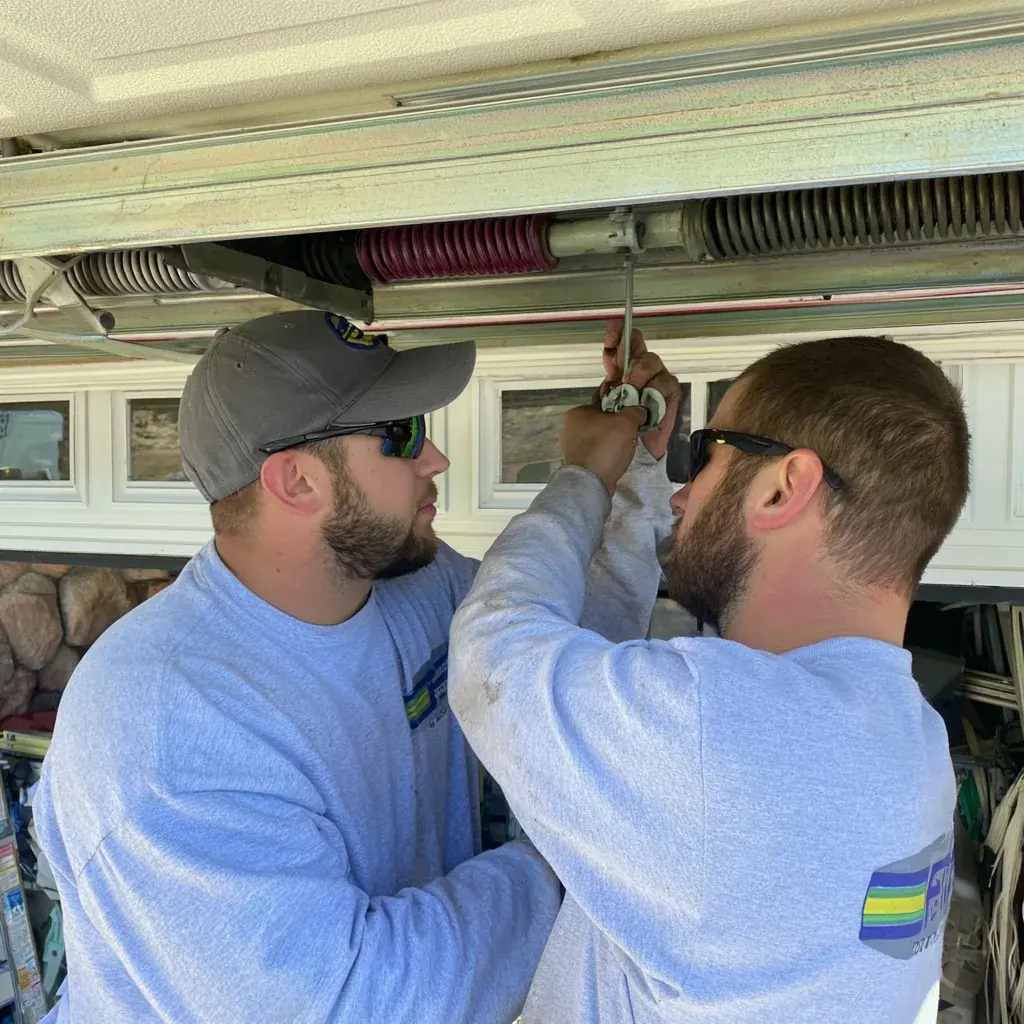
A tune-up on a Franklin garage door means a technician goes over every moving part and adjusts what needs adjusting before something quits on you. Nothing is replaced unless it has already failed or is close to it. Think of it as a checkup, not a fix. The point is catching a stiff hinge or a cable losing strands while it is still cheap, rather than after it strands a car inside a Westhaven garage on a Monday morning.
There is no contract behind this. A Franklin homeowner books one visit, pays for that one visit, and nothing renews on its own afterward. This is not a quarterly service plan like pest control, where a truck shows up on a schedule whether the house needs it or not. A garage door either needs looking at once a year or it does not, and booking a tune-up is a single decision, not a standing arrangement.
- Franklin's tune-up isn't a subscription. It's a yearly inspection you book because the door's steel parts have spent another summer in Tennessee humidity and another winter near freezing, and springs, rollers, and cables wear on a schedule the manual didn't set with Cool Springs weather in mind.
- An inspection with adjustments made to parts already installed, not a repair. If something is found worn or damaged, that gets written up and priced as its own job, separate from the tune-up itself.
- A way to spot a cable starting to fray or a hinge going stiff while it is still a small thing, before a Franklin summer's humidity or a winter cold snap pushes it toward a full breakdown.
What Gets Checked
The list covers the whole system, not just whatever sound prompted the call, because a door near Berry Farms or off Mack Hatcher Parkway can look fine at the wall button and still be one worn part from failing. A technician walks springs, cables, tracks, rollers, and the opener's safety settings in one visit, since a problem hiding in one part often shows up as strain somewhere else on the same door.
- Spring tension and how evenly the door balances, checked by disconnecting the opener and watching whether the door holds still partway up or drifts on its own.
- Cables and pulleys, checked for fraying, rust, and wear that has become uneven between the two sides of the door.
- Hinges and rollers, felt by hand for looseness, flat spots, or grinding, since a hinge working loose from vibration can throw the whole panel alignment off over time.
- Tracks, checked for alignment and cleared of dust and debris that build up near the bottom and make the rollers drag or bind as they travel.
- Bottom seal gets pulled back and checked for cracking or flattening where it meets the slab, since a worn seal lets in the grit that pop-up thunderstorms wash across a Cool Springs driveway after a spring downpour.
- The opener's force setting and auto-reverse function, tested by placing an object in the door's path to confirm it stops and lifts rather than pressing down against resistance.
- The pros go through nut and bolt fasteners on the track, header, and jamb, snugging what a year of Franklin driveway use has loosened, plus hinge pivot points and the opener's mounting bracket, which carries real stress every time the door cycles.
- Rollers get pulled from the track where possible and checked for flat spots or cracked wheels, since a roller that binds instead of rolling wears a groove into the track over time.
Why Once a Year Is Different Here
Most owner's manuals assume a mild climate that stays roughly the same all year, and Franklin does not sit still like that. Summers here run hot and humid enough to swell wood jambs and gum up old grease with dust, while a January cold snap can stiffen lubricant and shrink metal parts overnight. A door near Cool Springs or Grassland goes through that swing every year, which is why an annual check tends to catch more here than the manual's interval expects.
Cold is the other factor, and it works differently here than in a harsher climate. Franklin gets routine freezing nights each winter, and that cold stiffens grease, shrinks metal slightly, and can leave a door that was fine in October binding by January. It rarely breaks anything outright. It just adds friction the opener has to fight, and a yearly check is what catches that before the motor starts working harder than it should.
- A Franklin garage sees more humid, sticky months than the manual's climate assumption allows for, and thickened grease from summer heat behaves differently than the lubricant a door left the factory with.
- Homes near the Harpeth River and Carters Creek sit on soil that holds moisture longer after Middle Tennessee's spring storms, and that damp air works on hardware faster than a dry season would.
- March through May storm season brings hail and wind that can rattle a door on its track, and a spring tune-up catches loosened hardware before summer heat adds its own strain.
Book a Tune-Up
Booking a tune-up does not require identifying what is wrong first. A homeowner in Fieldstone Farms or near Pinkerton Park who has noticed the door open slower than it used to, or just wants it looked at before a season change, can schedule the same visit. The licensed pros we connect you with go through the full checklist, note anything worn or approaching failure, and quote any needed repair separately, so a homeowner in Franklin knows exactly what the door needs before agreeing to more work.
- Manuals are usually written for a mild, even climate, which is not what a door near Franklin Road or Mack Hatcher Parkway deals with across a Middle Tennessee year.
- Pop-up thunderstorms common to Williamson County drive humidity into a garage that a drier climate wouldn't, and that moisture reaches cables and fasteners faster than a manual's schedule expects.
- A hot, humid summer followed by a few hard cold snaps stresses lubricant and spring steel more than one mild season would, which is why the practical interval runs shorter than a year for many doors.
Tune-Up Facts To Know
- One visit, billed once. Nothing renews on its own, and no follow-up gets scheduled unless you call to set it up yourself, whenever that ends up being.
- There is nothing to sign that locks in a future visit. Book it, get it done, pay for that one appointment, and decide later when the next one makes sense.
- Franklin's real wear factor is airborne dust and pollen off Carters Creek and the Harpeth River bottomland mixing with summer humidity, not road salt. That combination builds a gritty film on tracks and rollers faster than a manual written for a drier climate expects.
- Franklin sits well inland in Middle Tennessee, so there's no salt spray or marine corrosion story behind any of this. The wear here comes from heat, humidity, and storm season.
- Winters bring occasional cold snaps rather than a long deep freeze, so this isn't a snow-load maintenance schedule. It's built around humid summers and spring storm season instead.
- Loosened hardware from spring storm season near the Harpeth River corridor often goes unnoticed until a cable or bracket fails. The annual check catches that wear months ahead of a breakdown.
Frequently Asked Questions
Do I get billed again automatically after this?
No. This is a single visit you schedule and pay for once, with no plan attached to it. Nobody signs up for repeat billing, and no follow-up appointment gets put on the calendar automatically. The next one happens whenever you decide to call again, a year from now or whenever it feels due.
How often should a Franklin garage door get serviced?
Most Franklin homeowners do fine with one tune-up a year. Dust from a gravel drive near Peytonsville Road, or a spring that sat through a humid Middle Tennessee summer, ages faster than the door's paperwork assumes. If yours grinds, sags, or the opener strains on cold mornings, don't wait for the calendar. Homes near Cool Springs or Westhaven with daily use often land closer to every eight or nine months.
Does humidity actually wear out a garage door?
Yes, though not through corrosion the way a coastal town would see it. Franklin's humid summers work moisture into wood door panels and can gum up grease on rollers and hinges, while winter cold snaps stiffen that same grease and make hardware bind. Neither wears a door out fast on its own, but the yearly swing between the two adds up faster than a one-climate manual accounts for.
What does the technician check during a visit?
A technician checks spring tension and balance, inspects cables and pulleys for fraying, tests rollers and hinges by hand, looks over the tracks for gaps or dents, and runs the opener's force and auto-reverse settings. Anything already worn or damaged gets pointed out and quoted separately, not fixed on the spot as part of the visit.
Ready to book a tune-up?
Get a Franklin garage door checked over top to bottom in one visit, with a plain list of what was adjusted.
Call (615) 759-0548