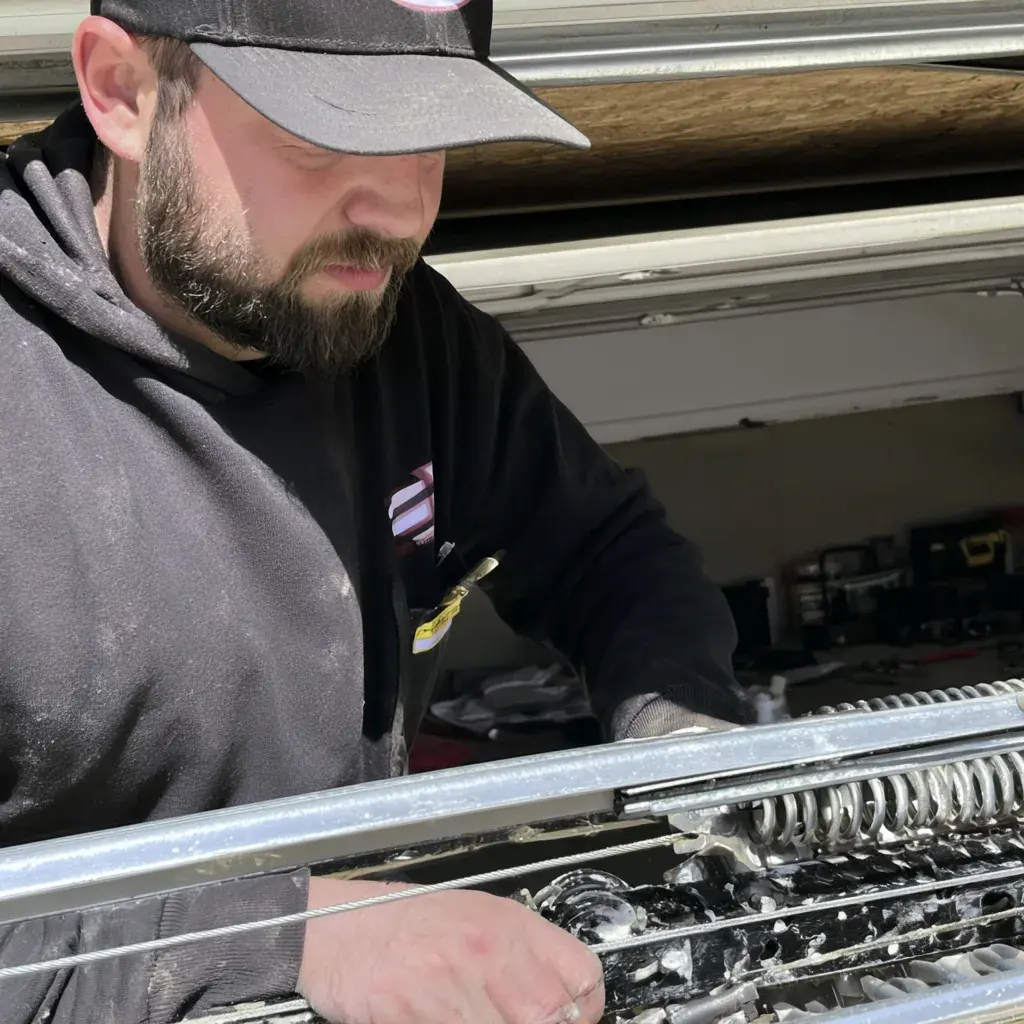
Grinding is not one thing. It is a mechanical noise that repeats as the door travels, and the pattern it follows tells you where to look first. A Franklin homeowner hearing it on a Berrys Chapel Road driveway or off Lewisburg Avenue is dealing with the same handful of causes: a roller losing its round, a bearing running dry, or grit sitting where lubrication should be. This post walks through each one before anybody needs to call for a repair.
What Grinding Points To
A grind means two surfaces are rubbing without enough lubrication, or one part has worn out of its original shape. It is not the same as a bang, which is a single loud event, or a rattle, which is loose hardware shaking. Grinding is steady and repeats with the door's motion. That repetition is the clue. Count how often it happens per full cycle of the door and you are already narrowing down whether it is one part or several.
Dry or Worn Rollers
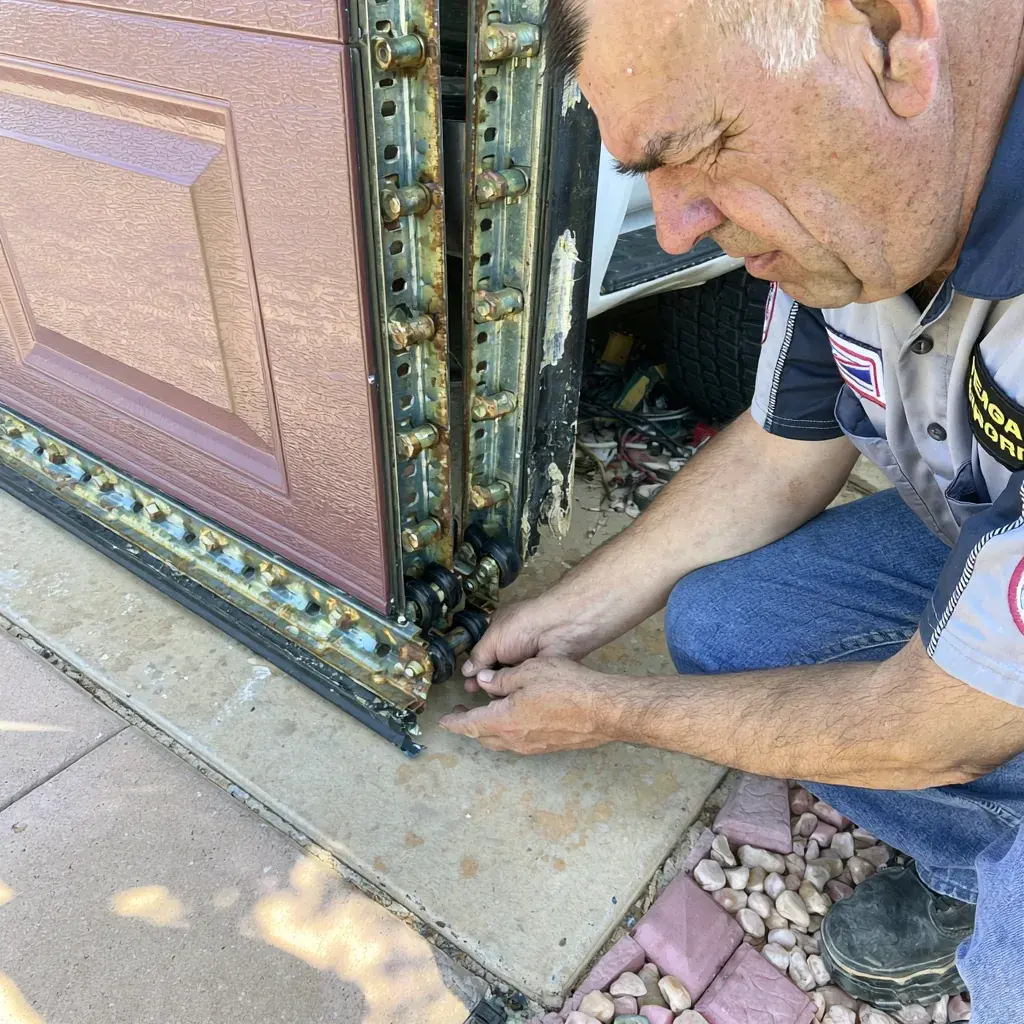
Rollers are supposed to spin freely inside the track, whether they are nylon or steel. When the factory lubrication dries out, or the roller wheel wears flat on one side instead of staying round, it starts dragging instead of turning. That drag is what you hear as grinding. A Franklin garage that runs a few times a day, every day, will wear its rollers down eventually just from that repeated motion, especially on the ones closest to the bottom panel.
A Bearing Wearing Out
Every roller has a small sealed bearing pressed into its center, and that bearing is what actually spins, not the roller shell itself. Grease inside a bearing breaks down over years of use, and once it thins out, metal parts inside start touching each other directly. That produces a grind that can sound almost identical to a bad roller from the outside, which is why sorting them apart usually means looking closely rather than guessing.
Grit Fouling the Track
The bottom track collects whatever blows or drips in from the driveway, and in Franklin that includes ordinary dust, pollen, and grit tracked in on tires. Once that grit mixes with old lubrication, it turns into a gritty paste instead of something slick. Rollers running through that paste wear faster and grind louder than they would in a clean track. Wiping the track out matters as much as anything you add back into it.
Where the Sound Starts
Sound travels along the track, so where you hear it isn't always where it starts. A grind near the bottom, close to the floor, usually points to the rollers doing the most work lifting the door's weight off the concrete. A grind up near the opener head is more likely the gear inside that unit. Franklin's summer humidity works against bare metal, so rollers that would squeak in a dry climate grind here once rust sets into the bearing.
One Bad Part or Several
Not every grinding door has one culprit. A track knocked out of alignment will chew through rollers that were fine a month ago, so replacing the roller without straightening the track just buys a short quiet spell. Springs losing tension shift extra load onto the opener gear, which can strip it faster than normal wear would. If your Franklin home has more than one of these sounds at once, treat it as a chain reaction, not four separate problems.
Older Homes, Older Rollers
Franklin's older homes, including many near the historic district downtown, were often built with garages that have run the same original hardware for decades. Rollers and bearings in those doors have simply logged more cycles than a door in a newer subdivision off Carothers Parkway, and age alone accounts for a lot of the grinding technicians find on service calls in those neighborhoods.
Newer Subdivisions See It Too
Newer construction is not immune. Homes in Berry Farms or Sullivan Farms can develop the same grinding within a few years if the door cycles often, since a busier household simply wears rollers down faster regardless of when the house was built. Frequency of use matters more here than the age of the structure itself, which is why a two-year-old door can grind just as loud as a much older one.
Clearing the Track First
Before touching lubricant, run a light down the track from the header to the floor and look for packed dirt, dried grease, or a bent section catching the roller. Franklin's mix of new-build subdivisions and older downtown homes means track wear looks different lot to lot, but grit buildup happens everywhere. Clear the track by hand first, because oiling over old grime just softens it into a paste that grinds louder than before.
Sounds That Can Wait
Not every noise demands same-day attention. A faint grind that has not changed in months, or one that only shows up occasionally, can often be watched for a while before it becomes urgent. A grind that is getting louder week over week, or that has started coming from a new spot on the track, is the version worth acting on sooner rather than later.
What to Check Before You Call
Sorting out where a grind is coming from is the useful part. Once a homeowner knows whether they are dealing with one worn roller, a failing bearing, or grit packed into the track, the next question is usually how it gets fixed, and how quickly. That is a separate question from the one this page set out to answer, but it is the natural one that follows once the noise has been identified.
Dealing with this in your home?
Franklin's clay soil swells after storms rolling through Cool Springs and settles again once things dry out near the Harpeth River, and a garage door track anchored to a slab or crawl space foundation shifts right along with it. Homeowners near McKay's Mill or off Del Rio Pike often notice the door binding on one side first, right when the ground moves.