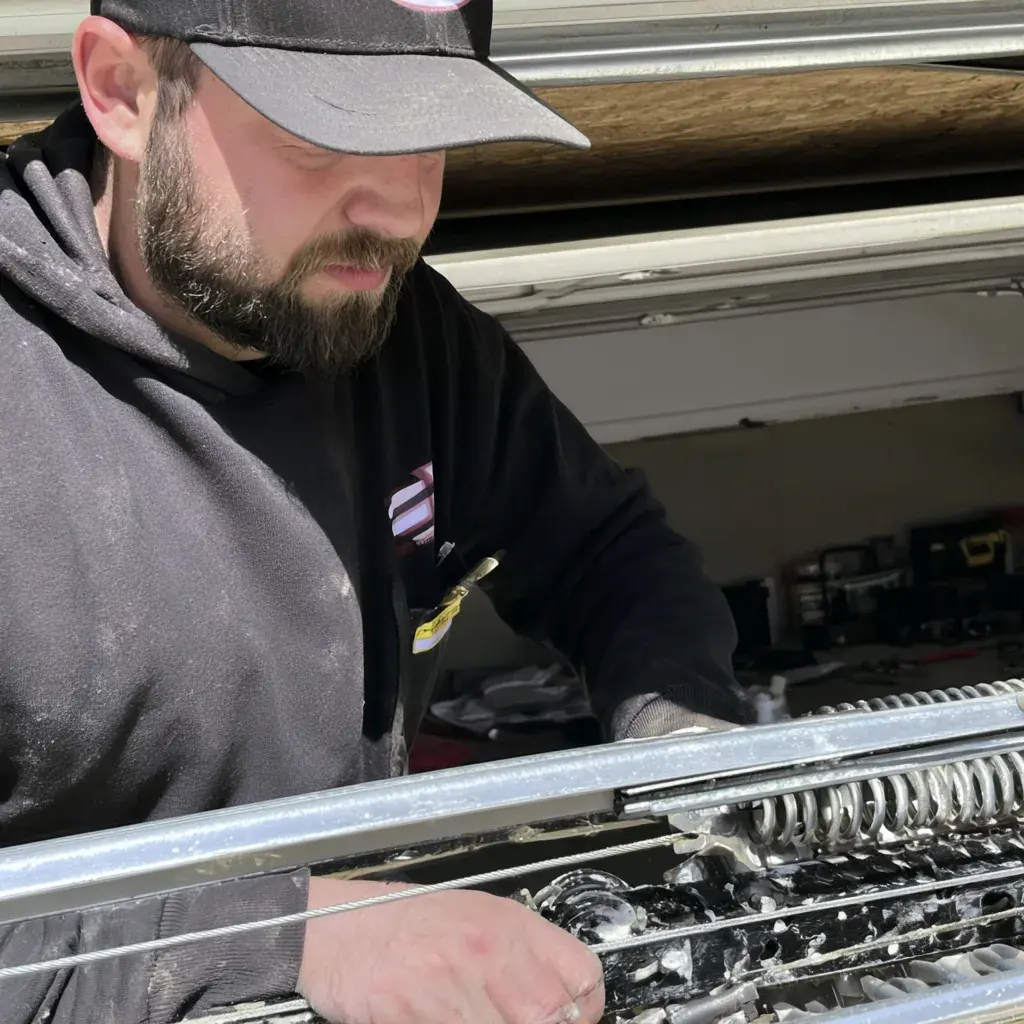
A garage door that hangs crooked in Franklin, with one corner dropped and a length of wound cable resting on the slab, has a snapped lift cable. The bang usually gets noticed first, often loud enough to bring someone out from the kitchen. The door itself will not look right afterward, tilted toward the side that lost its support, and it will not sit level again until that cable is replaced.
What The Cable Carries
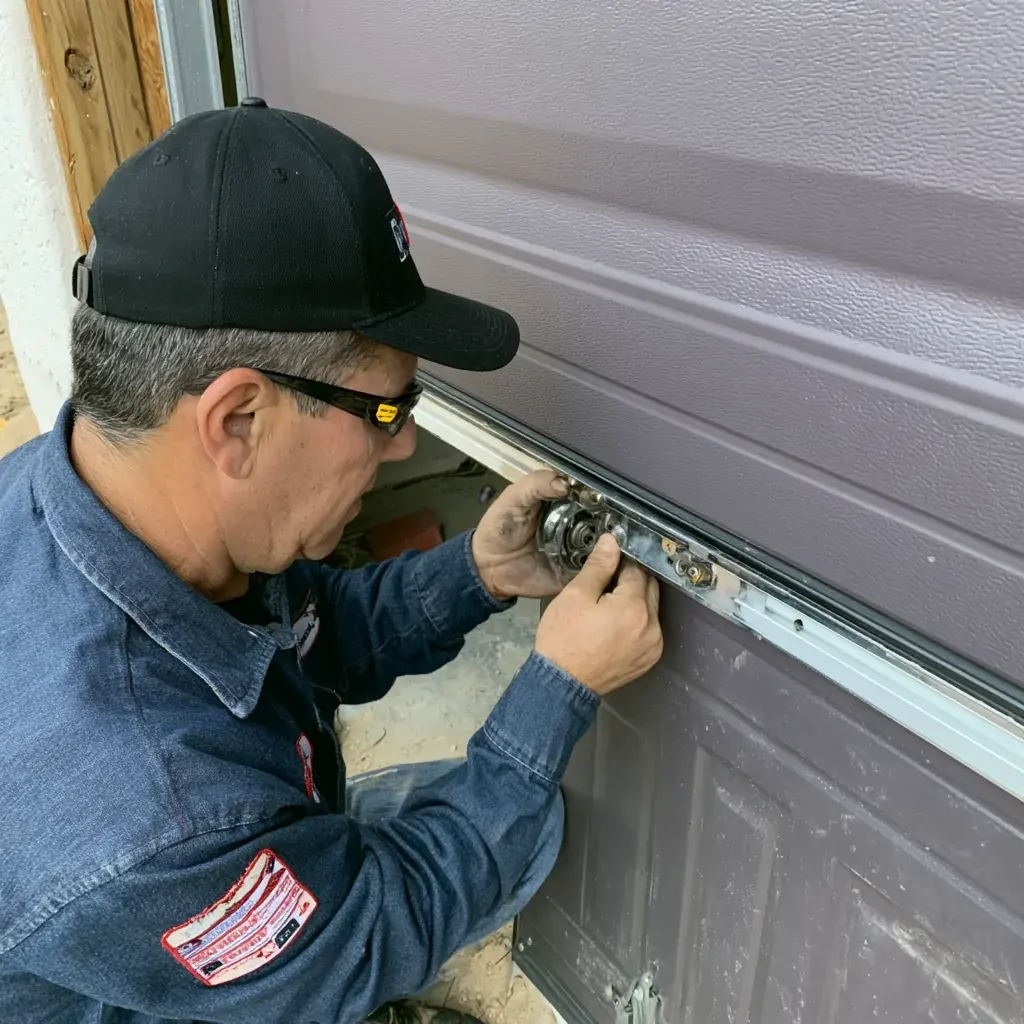
A garage door hangs from two cables that spool onto drums above the opener, each one anchored down at a bottom bracket on either side of the door. That cable is what actually carries the weight once the spring does its work, so when one strand frays and finally lets go, that corner drops with nothing left to hold it. Franklin homes near Cool Springs and Berry Farms see this most on older, higher-cycle doors.
Why The Spring Comes First
Cable rarely breaks on its own. The torsion spring does the lifting work, and the cable just transfers that force to the door. Once a spring weakens or loses tension unevenly, the cable on that side takes on strain it was never sized for, cycle after cycle, until a strand gives. That is why a snapped cable in a Franklin garage almost always traces back to the spring, not a defect in the cable itself. Fixing the cable alone, without checking the spring, usually means a second failure soon after.
Spotting Fraying Early
Look where the cable wraps the drum and where it curls around the bottom bracket pulley near the floor. Those two spots take the sharpest bend, cycle after cycle, and that is where thin steel strands start lifting away from the main line first. A door that groans, hesitates, or drifts slightly off-center as it closes is often showing this early. Catching it there, before full separation, is the difference between a scheduled cable swap and a door stuck crooked in a Grassland or Westhaven driveway on a Saturday morning.
Why Both Cables Get Swapped
A snapped cable rarely travels alone. Its match on the other side has spooled the identical number of times, carried the same door weight, and sat through the same Franklin summers and cold snaps, so it is usually just as close to failing. The licensed pros we connect you with generally replace both, not because the second one broke, but because leaving a worn cable in place invites a second visit and a second drop within weeks.
The Bang, Then The Tilt
The bang is the sound of stored tension leaving the cable all at once instead of releasing gradually. Once that happens, the door drops on the side that lost its cable while the other side stays attached, which is what puts the door at an angle in the track. It is not a slow sag. The door goes crooked in the same moment the cable lets go, and it stays that way until the cable and the spring behind it are addressed.
Cold Snaps And Tired Springs
Franklin doesn't see the kind of deep freeze that some places get, but a cold snap still catches a tired spring at the wrong moment. Metal loses a little flexibility as the temperature drops, and a spring that was already worn thin from years of winding and unwinding has less room to give. That's usually when it lets go rather than during a mild afternoon. Homes from Westhaven to Berry Farms see the same pattern once a hard cold front rolls through Williamson County overnight.
Grit, Gravel, And Long Drives
Homes in newer subdivisions around Berry Farms and Westhaven see less grit tracking into the garage than older properties near Boyd Mill Avenue or Del Rio Pike, where dust and debris from gravel shoulders and long driveways can work into the drum and track over time. That buildup does not snap a cable by itself, but it adds friction the spring and cable were not designed to fight against, which shortens the time before something upstream finally fails.
Reading A Crooked Door
A door sitting crooked in the opening after a cable failure has not jammed against the track. One side has simply lost its cable and dropped, while the other side is still held up, so the door tilts instead of sliding straight. Homeowners near Westhaven and Fieldstone Farms sometimes try the opener again at this point, thinking it stalled, but forcing it only twists the panels and stresses the remaining hardware further.
Why This Waits For A Pro
Even with the door sitting shut and quiet, the torsion spring above it is still wound tight, pulling hard on the drums and the cables looped around them. Trying to free a snapped cable, loosen the drum, or move the door by hand puts a person directly in the path of that force. It has nothing to do with confidence or the right tools from a garage in Legends Ridge or Laurelbrooke. It has to do with a spring that has no interest in staying calm once something holding it back is disturbed.
Taller Doors, Longer Cables
Franklin's newer subdivisions, including sections of Ladd Park and Founders Pointe, tend to have taller garage openings than the older homes near downtown Franklin, and a taller door needs a longer cable wound around a bigger drum to cover the extra travel. That length has to be measured and matched, not guessed at, so a cable pulled off a standard-height door will not spool right or hold tension on one of these taller bays.
What Happens Next
Once a cable gives out, the door stays put until a matching replacement is fit and wound correctly, with the spring rechecked so it is not carrying weight it should not. This is not a job for the opener to muscle through, and it is not something to leave half-fixed before a trip out Franklin Road or through Grassland. The licensed pros we connect you with can generally get to a snapped cable the same day it happens.
Dealing with this in your home?
Franklin's clay soil swells after storms rolling through Cool Springs and settles again once things dry out near the Harpeth River, and a garage door track anchored to a slab or crawl space foundation shifts right along with it. Homeowners near McKay's Mill or off Del Rio Pike often notice the door binding on one side first, right when the ground moves.